

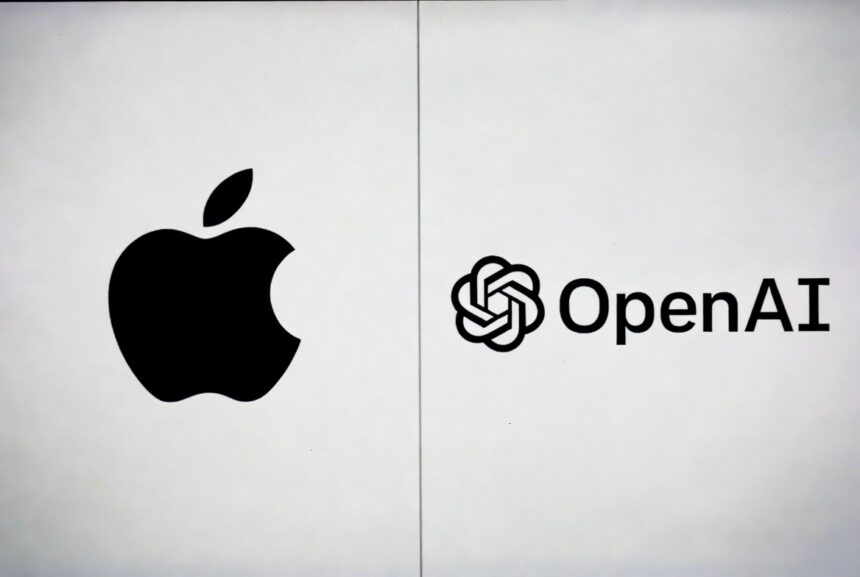
Apple sued OpenAI on Friday in federal court in Northern California, alleging the AI company ran a coordinated, months-long scheme to steal Apple trade secrets from departing employees to help build its own consumer AI hardware.
The lawsuit, filed in the U.S. District Court for the Northern District of California, names OpenAI, io Products, and two individuals as defendants: Tang Tan, OpenAI’s chief hardware officer and a 24-year Apple veteran who led iPhone and Apple Watch product design before departing in February 2024, and Chang Liu, a former senior electrical engineer who left Apple for OpenAI in January 2026.
Apple alleges Tan used insider knowledge of confidential Apple projects, including internal project code names, to question job candidates during OpenAI interviews and directed candidates still employed at Apple to bring “actual parts,” including batteries, logic boards and other components, to interviews for what the filing describes as “show and tell” sessions. Apple also alleges Tan retained or obtained an internal Apple document outlining employee departure security procedures and circulated it among new OpenAI hires to help them evade Apple’s exit checks before giving notice.
Separately, Apple alleges Liu failed to return a company-issued laptop and later discovered he could still access Apple’s internal cloud storage after leaving the company. According to the filing, Liu wrote to a former Apple colleague, “LOL, I found out I can access the (network storage), so funny.” Apple alleges Liu went on to access and download dozens of confidential hardware files, including engineering presentations, technical specifications and details of unreleased products.
Apple said in a statement that it first raised its concerns directly with OpenAI in February and never received a response. “This is the tip of the iceberg,” Apple said in the filing, adding that OpenAI’s hardware business “rests on the shakiest of foundations” due to what it called illegal reliance on misappropriated trade secrets. In a separate statement, an Apple spokesperson said, “At Apple, our teams are constantly developing breakthrough technologies to create the best products and services in the world, and protecting their work and intellectual property is something we take very seriously.”
The lawsuit references a proprietary metal-finishing technique Apple alleges OpenAI used after misleading a manufacturing partner into believing it had Apple’s permission to do so. Apple’s filing states more than 400 former Apple employees now work at OpenAI. The complaint seeks injunctive relief barring OpenAI from using or disclosing Apple’s trade secrets, the return of any confidential materials, and unspecified damages to be determined at trial, along with breach-of-contract claims against Tan and Liu individually.
OpenAI’s hardware effort traces to its 2025 acquisition of io Products, the startup co-founded by former Apple design chief Jony Ive, in a deal reported at roughly $6.4 billion. Ive is, however, not named as a defendant in the suit, and Apple does not accuse him of wrongdoing. The device, which OpenAI has not detailed publicly, has been reported by other outlets to include a smart speaker and a screen-free wearable aware of its surroundings, with OpenAI’s chief global affairs officer previously indicating a launch in the first half of 2026.
The suit lands amid an already strained relationship between the two companies. Apple’s upcoming revamp of Siri, due later this year, is built on Google’s Gemini models rather than OpenAI’s technology, and Bloomberg reported in May that OpenAI had separately been considering its own legal action against Apple over claims Apple had not adequately integrated and promoted ChatGPT within Apple Intelligence. Apple’s complaint states that dispute is not at issue in Friday’s filing. Apple and OpenAI struck their original partnership integrating ChatGPT into Apple’s operating systems in 2024.
The lawsuit adds to a run of legal exposure for OpenAI as the company prepares for what is widely anticipated to be a large public offering. OpenAI won a separate high-profile trial two months ago, when a federal jury found Elon Musk had waited too long to sue the company over claims that chief executive Sam Altman, co-founder Greg Brockman and OpenAI reneged on commitments to operate as a nonprofit; Musk has said he will appeal.