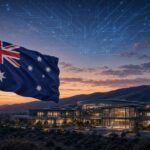
Albanese Urges US-China AI Deal Like Nuclear Treaty as he carries the line from Apple Park to the United Nations. After an hour with Tim Cook in Cupertino, the prime minister told the ABC that Washington and Beijing are “the big two giants” and that middle powers such as Australia have a role in getting them to cooperate. He pointed to nuclear weapons as the precedent. Humans, he said, must “remain in control.”
Albanese Urges US-China AI Deal Like Nuclear Treaty: the week around it
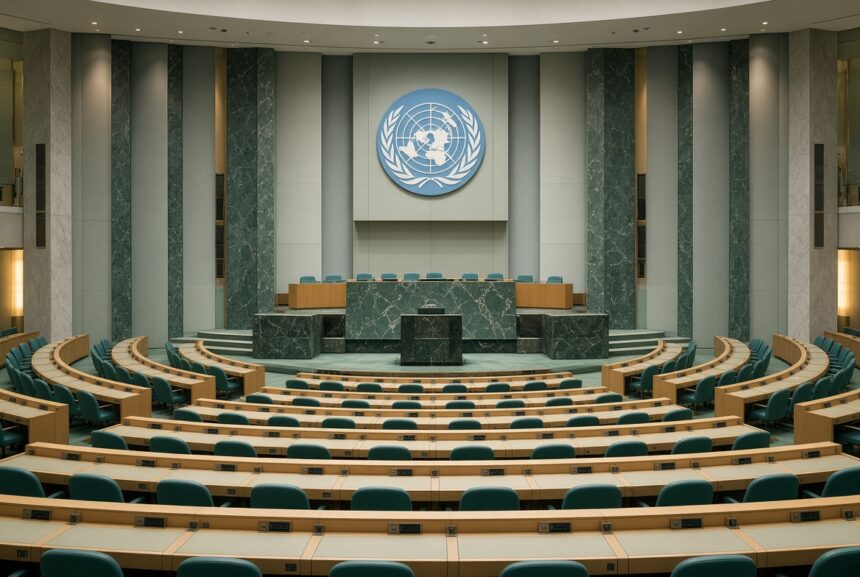
Leaders at the General Assembly will talk about an international AI framework. Australia is also launching its campaign for a non-permanent Security Council seat in 2029-30. Albanese is selling the same package he used on the teen social media ban: we went first at home, now we want a chair at the table that writes the next rule.
The nuclear comparison is doing a lot of work. The 1970 Non-Proliferation Treaty did not stop the first two powers from building arsenals. It tried to stop everyone else from joining them, and it built inspection habits around a technology that could end cities. Albanese is asking for something looser: protocols so the rollout does not outrun the people who are supposed to govern it. He has not tabled text. He has not named an agency. He has named the two capitals that would have to sign.
US and Chinese security specialists published their own nuclear-style list last week, including red lines around nuclear command systems, human control of major cyber operations, and an incident hotline. That paper landed ahead of a planned Trump-Xi meeting in Washington this week. Albanese told Insiders he hoped that meeting produced “progress.”
Where Trump sits
The slogan collides with the White House. Trump has said the United States is leading China and that he intends to keep it that way. He announced an “AI force” to guard against the technology’s “decimation or destruction,” and he has treated a coordinated slowdown as a gift to Beijing. Anthropic’s Dario Amodei called for a pause. Sam Altman and Elon Musk backed the idea. Trump did not.
Albanese tried to thread it. He said he thinks Trump knows the United States is still ahead. He also said sitting on the sideline is not an option because AI is a “global phenomenon.” That is a middle-power sentence. It assumes the giants will let a country of 27 million help write the rules for the models they train.
What Australia can actually put on the table
At home the file is messier than the UN pitch. National AI standards are still a consultation paper. Large data centres would have to underwrite new power. Frontier trainers would report defined incidents. Copyright remains the lock on local training. Anthropic has said Claude will not be trained in Australia until a payment path exists. Albanese left the door open to an opt-out regime even after creators spent last week calling that theft.
The Office of AI inside his department is reported to have fewer than 10 permanent staff. Cook’s hour was about child safety features inspired by the under-16 ban, a digital duty of care, and opting out of algorithmic feeds. None of that is a treaty with Xi.
What the analogy hides
Nuclear weapons are countable. AI models are copied, distilled and run in rented halls. A treaty that treats compute like uranium would need inspections the labs will fight and China may not accept. A treaty that is only a communique will be forgotten when the next model ships.
Albanese Urges US-China AI Deal Like Nuclear Treaty because the UN week needs a sentence that sounds like statecraft. The test is whether Trump and Xi leave Washington with anything a middle power can point to. If they do not, Australia still has a Security Council bid, a thin AI office, and a slogan that travelled well from Cupertino to First Avenue.