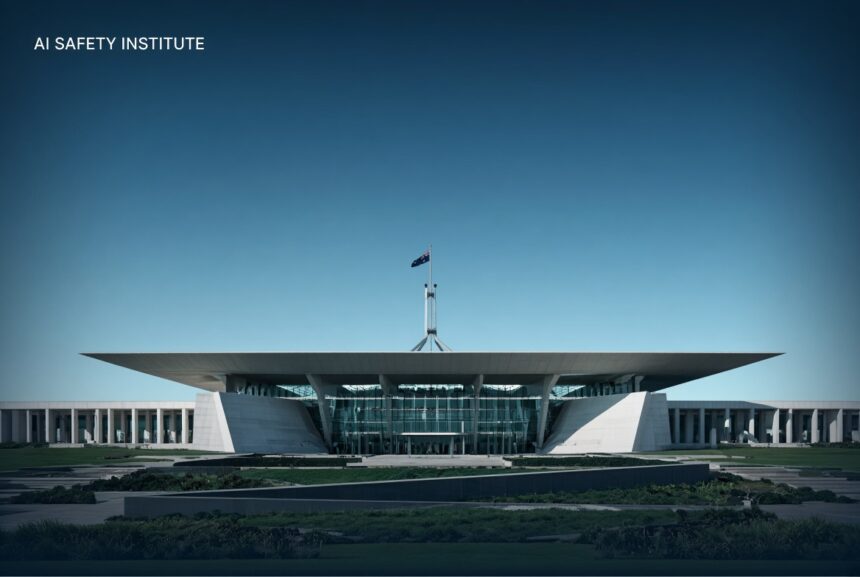
AI Safety Institute funding is not enough for the body to be taken seriously internationally, experts told the Joint Select Committee on Artificial Intelligence on Friday. Janet Egan, a former prime minister’s office staffer who now researches in Washington, said the institute’s remit is too broad and its money is too small.
“I don’t think Australia’s AI Safety Institute is currently resourced enough to be taken seriously on the international stage,” she said. “It also has an incredibly broad remit, providing AI advice to the entire government. The $7.5 million figure is nothing compared to what other countries are throwing at this.”
She and Sam Winter-Levy were among 16 witnesses on the Friday list. Both said helping frontier companies build in Australia would be a bargaining chip for influence and access. Egan said the overseas institutes give governments situational awareness, and the ability to work on the unsolved questions of alignment and control.
What the AI Safety Institute funding actually is
A spokesman for Industry and Innovation Minister Tim Ayres said the government is providing $29.8 million for the newly established institute. That is the public allocation. Egan used a $7.5 million figure. The minister’s office did not explain the difference.
“The Albanese Government has put safety at the heart of the National AI Plan,” the spokesman said. The institute provides existing authorities with up-to-date information on emerging risks. It has commenced safety testing of models and is collaborating with international partners, including the UK.
Nine reported that the UK’s AI Security Institute receives about 16 times more than Australia, that Canada has committed the equivalent of $50 million to launch its institute, and that the US Centre for AI Standards and Innovation gets about $78 million.
The institute sits inside the Department of Industry, Science and Resources. It was announced under the National AI Plan. Its job is to monitor, test and analyse advanced AI capabilities, risks and trends. In October it released CSIRO research on whether a model’s output is correct and whether it is influencing its human users. It has also commissioned work on multi-agent risks.
Why the gap matters now
Anthropic told the same inquiry earlier this month that it is finalising an agreement for the institute to run its own independent evaluations of frontier models, delivering on a memorandum of understanding signed in April. OpenAI and Anthropic both said they would support mandatory reporting of security incidents involving their agents. That is the work the institute is supposed to sit inside.
Egan’s point is that the body cannot do that job, and also advise the whole of government, on the money she cited. Ayres has signalled the government may increase funding for national AI security. He has not named a new figure. The committee’s full report is due on 30 November. Next hearings are in Sydney on 20 and 21 October, and Melbourne on 22.