

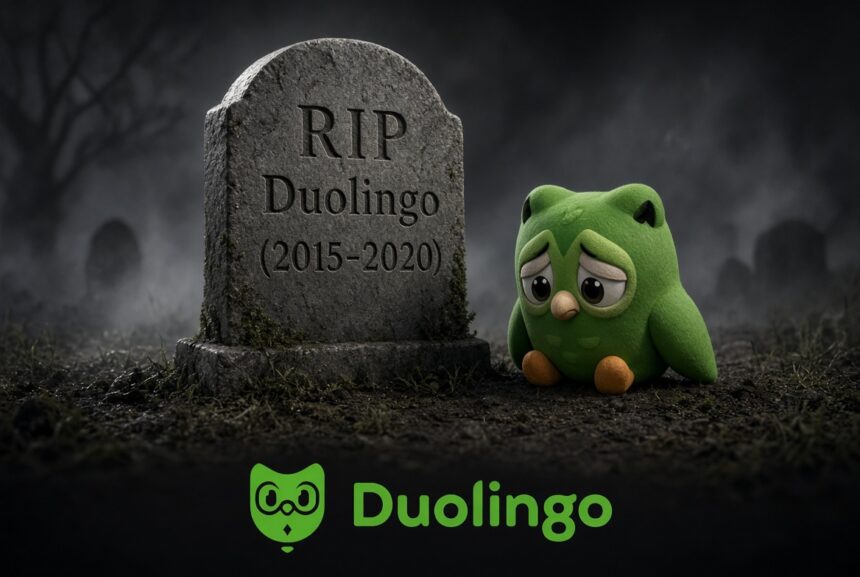
A few years ago, Duolingo felt like a breakthrough in language learning. It was free, addictive, and genuinely useful. Today, many learners are asking why Duolingo feels worse than it did between 2015 and 2020. What once felt like a clever language course now often feels more like a generic mobile game that prioritizes streaks, XP, and notifications over real progress.
Why Duolingo Feels Worse Today
Duolingo still looks modern and remains excellent at getting people to open the app every day. The problem is that the free experience is now heavily interrupted by ads and the hearts system. Make a few mistakes and you are locked out unless you wait, watch ads, or pay.
The paid Super Duolingo version removes some of these friction points, but the underlying teaching method has not improved in proportion to the price. Lessons have become shorter and more fragmented. Many feel designed around rapid taps and matching exercises rather than building real understanding.
The app leans harder on gamification (XP, leagues, streaks, animations) while the language content itself often feels shallower. What once was a clever and accessible course now frequently feels like a mobile game that happens to be themed around language learning.
This becomes most obvious once you move beyond beginner content. Duolingo is still decent for the first few hundred words and basic sentence structure in major European languages. But once you need deeper grammar and natural phrasing, the limitations are hard to ignore.
Why Duolingo Feels Worse Outside Spanish and French
Duolingo’s strongest courses remain Spanish and French. These languages have the largest number of learners, the most polished content, the best voice acting, and the most complete skill trees. Exercises feel more varied and the path from beginner to intermediate is clearer.
For almost every other language, the experience drops off significantly. Content is thinner, explanations are weaker or missing, and the number of useful exercises is lower. The app treats Spanish and French as premium products and many other languages as secondary afterthoughts.
To make matters worse, the company has added completely unrelated courses such as chess and maths while many language courses remain unfinished or broken. This suggests a possible identity crisis behind the scenes.
Why Duolingo Feels Worse for Chinese Learners
The quality gap is especially clear in Chinese. After spending significant time in Duolingo’s Chinese course and comparing it with specialized apps, the difference is stark.
Duolingo’s Chinese course covers basic vocabulary and sentence structures, but it struggles with more advanced elements that become problems later:
- Tone practice is limited and often feels secondary
- Character learning is superficial, with weak tools for writing, stroke order, or systematic building
- Listening material is restricted and frequently robotic
- Grammar explanations are minimal or absent
- There is little structured progression into intermediate content
In contrast, apps built specifically for Chinese perform much better. HelloChinese offers clearer tone training, stronger character writing practice, and more natural speaking exercises. Super Chinese provides more structured lessons, vocabulary focused on real situations, and a clearer sense of progression. Both feel designed to teach Chinese first rather than simply keep you inside the app.
Once you move past the beginner stages on Duolingo Chinese, progress slows dramatically. The app does not provide the tools or depth needed to keep improving efficiently. Many learners now believe this is deliberate rather than an accidental design flaw.
Better Alternatives If You’re Wondering Why Duolingo Feels Worse
If you want to learn a language other than French or Spanish, or if you don’t want to stay stuck as a hard-stuck beginner just to climb leagues, Duolingo is no longer the best choice for most people.
For languages other than Chinese, a stronger combination is Busuu paired with a proper textbook and Anki for vocabulary retention.
For Chinese specifically, HelloChinese or Super Chinese are far superior. Both teach toward the HSK standard (something Duolingo’s Chinese course does not). Pair either with Anki for word retention and stroke-order practice. HelloChinese already includes an excellent built-in character learning system.
In short, the reasons why Duolingo feels worse than it did between 2015 and 2020 are clear: heavier monetization, more aggressive gamification, shallower lessons, and uneven quality across languages. The app is still good at getting you to open it every day. It is no longer as good at actually teaching you a language.