

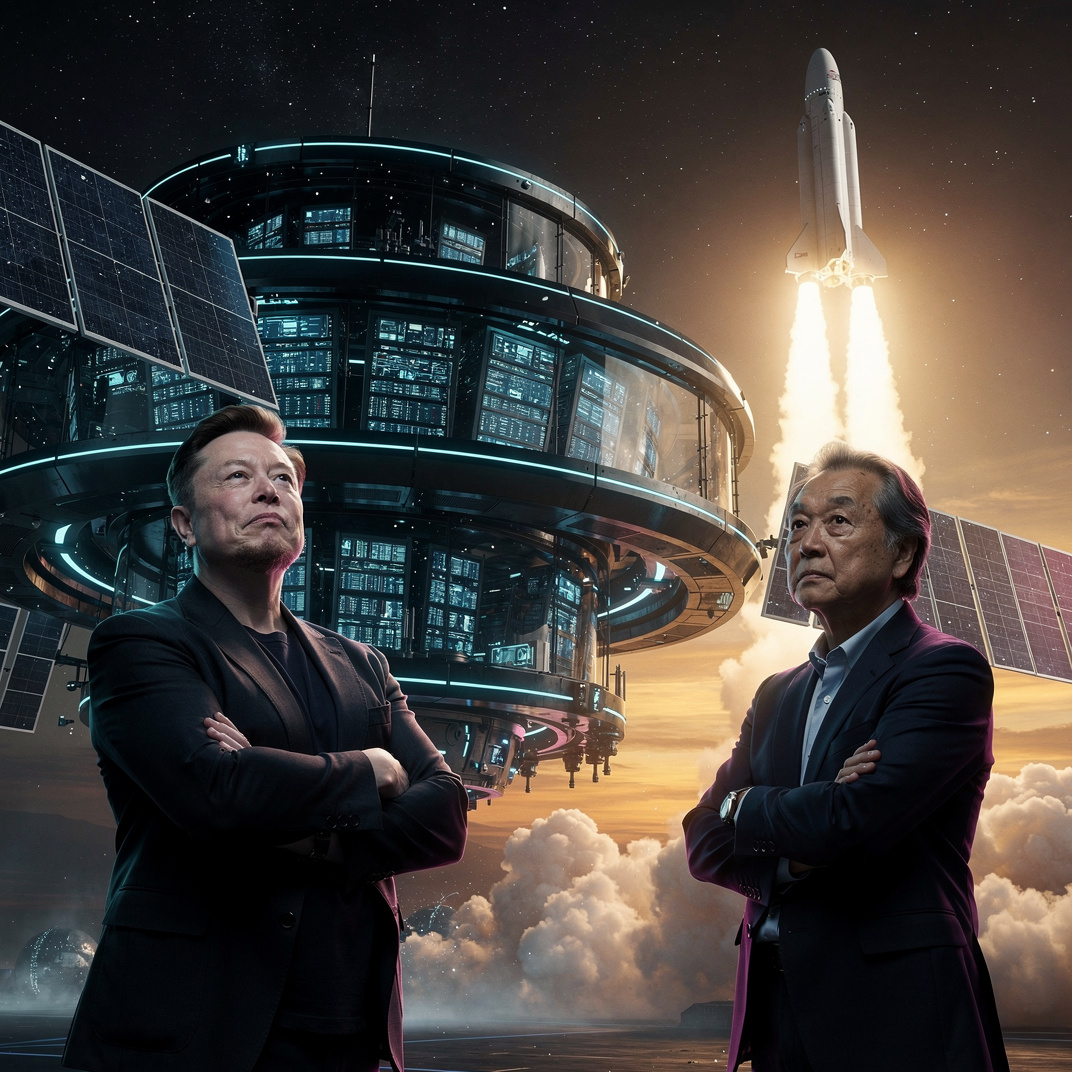
SoftBank Group CEO Masayoshi Son has expressed skepticism about Elon Musk’s vision for orbital data centers. This raises fresh doubts about one of the most ambitious proposals to power the artificial intelligence surge as nations including Australia grapple with the massive energy and infrastructure needs of the technology.
Son, whose SoftBank is a major technology investor, joined a growing chorus of industry voices questioning whether satellite-based data centers, sometimes called “data centers in space,” can realistically address the exploding demand for computing power driven by advanced AI models. Musk has promoted the idea as a way to bypass terrestrial constraints like power grids and land use. The approach would potentially deploy massive computing clusters in orbit linked to Starlink satellites.
The comments come as AI infrastructure spending surges globally. OpenAI, Microsoft, Google and others are racing to build or expand data centers. However, the projects face hurdles including electricity shortages, water usage for cooling and regulatory pushback.
In Australia, the debate has local resonance. The country is positioning itself as an AI player through its National AI Plan. But rapid growth in data centers has already sparked concerns over energy reliability and environmental impact, particularly in New South Wales and Victoria where proposals have drawn community opposition. Experts note that orbital concepts, while innovative, would still require enormous ground-based support and could raise new issues around space debris, international regulation and sovereign control of data.
Analysts say Australia could benefit from global AI advancements if it strengthens partnerships and invests in complementary infrastructure. However, over-reliance on hyped foreign projects risks leaving the nation vulnerable to supply chain or geopolitical disruptions.
Musk’s SpaceX and xAI have not publicly detailed timelines or technical specifications for orbital data centers. SoftBank did not respond immediately to requests for further comment on Son’s remarks.