
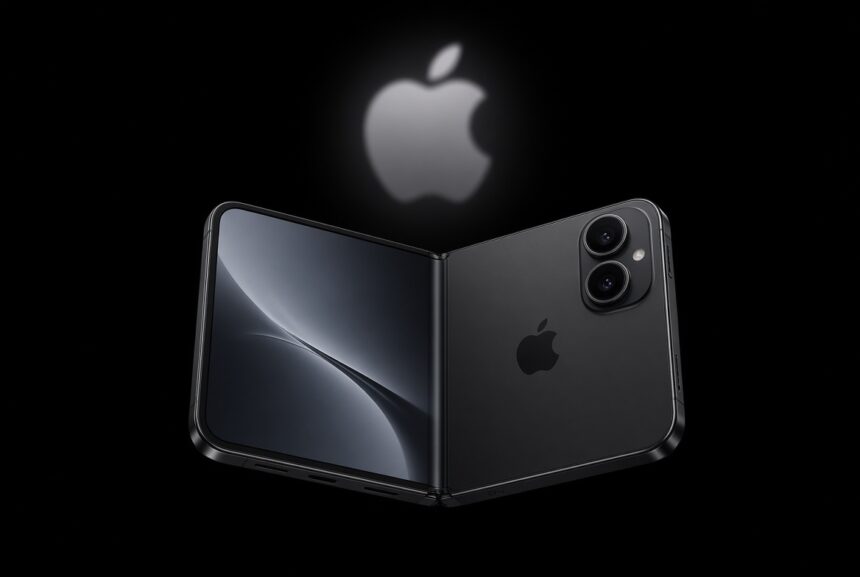
Apple Inc. is paying Samsung Display about $250 for each folding inner screen in the iPhone Duo, Chinese supply-chain accounts said Friday, a figure neither company has confirmed.
The number, posted Sept. 11 on Weibo by accounts that follow Apple’s suppliers, including Instant Digital and Momentary Digital, would make the foldable panel one of the costliest parts in Apple’s first book-style iPhone. The Duo starts at $1,999 in the United States. At $250, the inner display alone would account for about one-eighth of the sticker price, before assembly, testing or the separate cover screen.
Apple announced the Duo on Sept. 9 alongside the iPhone 18 Pro line. The phone closes to a 5.4-inch outer display and opens to a 7.6-inch inner panel with a nano-texture coating. Several outlets list pre-orders for Oct. 16 and sales beginning Oct. 23. Apple’s store page should be checked before treating that date as final. Apple and Samsung Display have not commented on the reported contract. Component prices are almost never disclosed in official filings.
The leak fits a pattern already visible in the hardware. Industry reports have long said Samsung Display is the only supplier that can meet Apple’s yield and reliability bar for a folding OLED at iPhone volume. LG Display does not mass-produce book-style foldable panels for Apple. Chinese maker BOE supplies foldables to Huawei, but Apple has treated those panels as below its quality threshold, according to supply-chain reporting. That left Samsung Display, a unit of Apple’s fiercest phone rival, with unusual leverage on price and term.
Tipsters say the contract covers the current Duo and later foldable iPhones through about 2028 and uses Samsung’s M16 OLED material set, which the Korean firm pitches as brighter, longer-lived and more efficient than earlier foldable stacks. Apple has described “high-strength glass” above and below the folding panel. Trade reports say those ultra-thin glass layers come from Samsung partner Dowoo Insys, with Samsung Display making the OLED core. The $250 figure is generally treated as the inner module only. Separate estimates put the cover display near $80. Neither number includes labor to install or test the stack.
For context, Apple has typically paid Samsung Display and LG Display on the order of $70 for a conventional iPhone OLED, according to AppleInsider. A folding panel is a different machine: two sheets of glass, a crease-management stack, extra polarizers, and a hinge that must survive hundreds of thousands of folds without letting dust into the cell. Repair shops have floated inner-display replacements near $1,000. Those are shop estimates, not an official Apple out-of-warranty price list.
If the $250 price is close to right, cash flowing to Samsung Display adds up quickly even at a cautious sales run. SamMobile, using an unofficial target of 5 million units for the rest of 2026, put panel revenue near $1.2 billion this year. A Citi estimate of 7.3 million units in the first 12 months would push that closer to $1.8 billion, before any cover-screen sales. Those shipment forecasts are analyst or blog guesses, not Apple guidance. Foldable launches have a history of missing first-year targets.
The display is not the only expensive line on the bill of materials. PhoneArena, citing market shop Nemo, put the A20-class chip around $280, the enclosure and hinge as another large ticket, memory sharply higher after a 2026 DRAM squeeze, and a rough parts total near $760 before software, freight and retail. The same shop had pegged last year’s iPhone 17 Pro Max near $408 in parts. That gap helps explain why Apple opened the Duo $800 above the iPhone 18 Pro. It does not mean Apple’s margin on the foldable is thin. Cupertino still controls price, software lock-in and a service network that charges far more than the panel invoice when the glass fails.
The arrangement is awkward politics and ordinary supply-chain math. Samsung Electronics’ mobile division is marketing the Galaxy Z Fold 8 as thinner and lighter than the Duo and has needled Apple in social posts. Samsung Display, a different profit center, collects a check every time a Duo leaves the factory. Apple has used that split for years on slab iPhones. The foldable version simply raises the invoice.
What remains unproven is the $250 itself. Weibo leakers have been early on Apple panel suppliers before and wrong on exact dollars. Until a teardown lab or a securities filing puts a number on the purchase order, the documented story is narrower: Apple needed a foldable screen only Samsung could ship at scale, signed what tipsters describe as a multi-year exclusive, and is paying a multiple of a normal iPhone OLED if those posts are right. The companies that would confirm that sentence have so far said nothing.